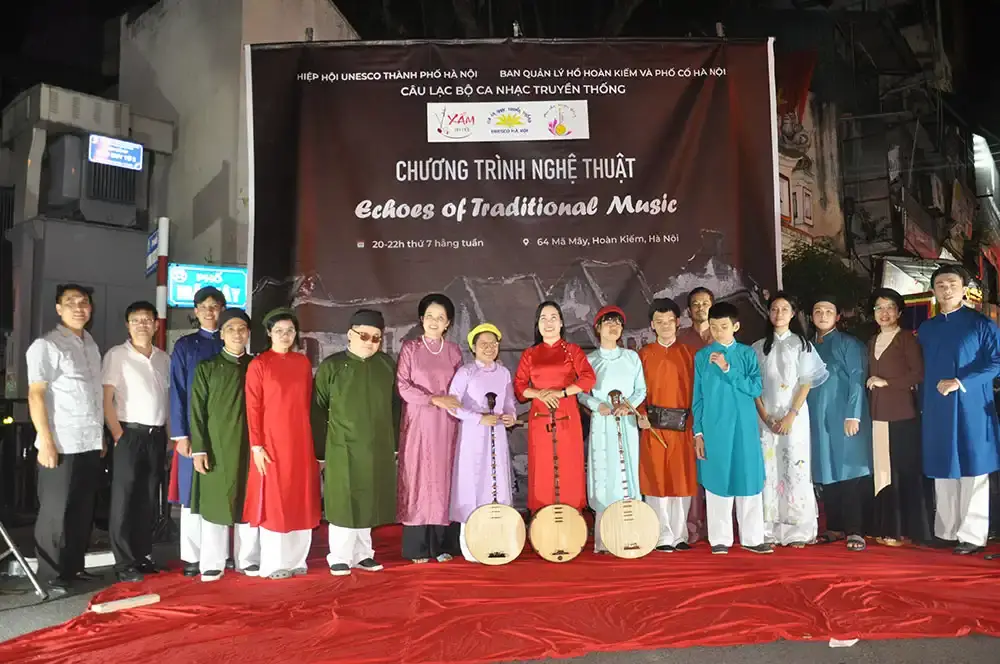
Xam singing preserved and spread is an integral part of Vietnam’s rich cultural heritage. This traditional art form not only reflects the beauty of Vietnamese folk music but also embodies the spirit and life stories of its people. In this article, we will delve into an upcoming event that showcases Xam singing and other forms of traditional Vietnamese music, highlighting their significance in preserving our cultural identity.

Mục lục
Performance of Hanoi Xam Singing Art Club
The performance organized by the Hanoi Xam Art Club promises to be a captivating experience for both locals and tourists alike. Scheduled to unfold in the vibrant heart of Hoan Kiem district, this gathering invites audiences to immerse themselves in the enchanting sounds of Xam singing, along with various genres of folk music.
This monthly event serves as a stage where the echoes of history resonate; it celebrates the talents of artists dedicated to keeping these age-old traditions alive. The collaboration between local clubs underscores a shared sense of purpose: to preserve Vietnam’s musical heritage while enriching the cultural landscape of Hanoi.
Significance of Xam Singing
Xam singing embodies the essence of Vietnamese folk culture, telling stories of everyday life and experiences through melodic tunes. Originating from the northern regions of Vietnam, Xam singing was traditionally performed by blind musicians who wandered from village to village, sharing their songs while earning a living.
Today, Xam has transcended its humble beginnings, becoming a symbol of resilience and creativity that captures the hearts of many. Each note and lyric serves as a reminder of the rich tapestry of Vietnamese history, showcasing human emotions ranging from joy and love to sorrow and longing.
As we attend performances, we embrace the opportunity to witness how Xam singing continues to evolve yet remains deeply rooted in tradition. The intertwining of contemporary elements with classic styles creates a dynamic atmosphere, ensuring that this cherished art form remains relevant for future generations.
Exploring Other Folk Genres
Xam singing is just one facet of the multifaceted world of Vietnamese folk music represented during the performances. The inclusion of diverse genres such as Hat Van, Cheo, and Cai Luong enriches the experience, inviting spectators to explore the depth and breadth of Vietnam’s musical traditions.
Hat Van, for instance, often features spiritual themes and is accompanied by traditional instruments. It provides a profound connection between the performer and the audience, creating an immersive atmosphere filled with intention and reverence. On the other hand, Cheo offers a more playful aspect of Vietnamese culture, incorporating comedic elements that entertain and engage viewers in storytelling through song.
By presenting these varied forms of folk music, the performance becomes a celebration of Vietnam’s artistic diversity. Audiences are not merely passive listeners; they become participants in a unique cultural dialogue, bridging the gap between past and present.
The Role of Artists and Preservation Efforts
The artists involved in the Hanoi Xam Art Club play a crucial role in the ongoing preservation of Xam singing and other folk genres. Their dedication and passion breathe life into these ancient art forms, ensuring that they continue to thrive amidst the rapid changes of modernity.
Through workshops, training sessions, and collaborations with organizations like the UNESCO Traditional Music Club, these artists engage in efforts to keep the traditions alive while adapting them to contemporary tastes. This synergy between old and new fosters innovation while respecting the roots of each genre.
Moreover, performances serve as platforms for networking among artists and audiences, igniting discussions about cultural identity and heritage. They inspire a collective responsibility to safeguard these treasures, instilling pride in community members who recognize the value of their cultural roots.
Location: No. 64 Ma May – Hoan Kiem Walking Street, Hanoi
Nestled in the bustling streets of Hanoi, the venue at 64 Ma May stands as a prominent location for cultural gatherings. Situated within the Old Quarter, it embodies the charm of a city steeped in history. The choice of this particular site reflects the intent behind the performances—bringing folk music closer to those who walk its cobblestone paths, allowing spontaneous encounters with the arts.
Cultural Atmosphere of Hoan Kiem District
Hoan Kiem district is renowned for its lively ambiance, drawing in crowds of both locals and international visitors. The area is characterized by its scenic landscapes, street food vendors, and colonial architecture, which together create a vibrant backdrop for the arts.
As attendees gather for performances, they become part of a larger cultural mosaic that defines Hanoi. This intersection of music and communal space facilitates connections among individuals from various walks of life, fostering understanding and appreciation for the nuances of Vietnamese culture.
In this context, music becomes a unifying force, transcending language barriers and inviting all to partake in the experience. It encourages attendees to reflect on their own journeys while resonating with the stories conveyed through music.
Accessibility and Inclusivity of Performances
One of the most remarkable aspects of the performances at 64 Ma May is their accessibility. By hosting outdoor concerts that are free of charge, organizers break down financial barriers, allowing everyone to experience the power of cultural expression. This commitment to inclusivity is vital in a society seeking to foster unity amid diversity.
Free performances invite families, students, and tourists to participate without hesitation. The open-air setting creates a relaxed environment, encouraging audiences to engage freely before, during, and after the shows. This communal aspect enhances the feeling of connection among attendees, turning each performance into a shared celebration of culture.
Enhancements Through Collaboration
The partnership with the UNESCO Traditional Music Club amplifies the potential of the events held at 64 Ma May. This collaboration brings together resources, expertise, and networks that enable artists to refine their skills and promote traditional music effectively.
Working together, these clubs can curate diverse programs that capture the essence of Vietnamese culture while appealing to a wider audience. This strategic approach encourages knowledge exchange and the development of innovative ways to present traditional music, ensuring that it resonates with contemporary spectators.
Cooperating unit: Unesco Hanoi Traditional Music Club
The collaboration with the UNESCO Traditional Music Club marks a significant milestone in promoting and preserving Vietnam’s folk music traditions. By joining forces, these two organizations enhance the quality of performances and broaden their impact on society.

Shared Vision for Cultural Heritage
Both clubs share a common vision: to celebrate and preserve the unique cultural heritage of Vietnam. By pooling their resources and expertise, they create a platform where traditional music can flourish and reach new audiences.
This collaboration extends beyond performances; it encompasses educational initiatives, community outreach programs, and research projects aimed at documenting the evolution of folk music. Together, they work towards creating a sustainable ecosystem that nurtures artistic talent while upholding cultural values.
In addition, their combined efforts empower local artists to take ownership of their craft. As they gain visibility and recognition, they inspire others to pursue similar paths, leading to greater investment in cultural preservation.
Educational Initiatives and Workshops
One of the key facets of their partnership is the focus on educational initiatives and workshops. These programs aim to equip aspiring artists with the skills necessary to navigate the intricacies of performance and composition within traditional frameworks.
Workshops provide a nurturing environment for younger generations to learn from seasoned musicians, ensuring that valuable techniques and knowledge are passed down. Participants gain insights into the cultural significance of various music forms, fostering a deeper understanding and appreciation for their heritage.
Moreover, educational outreach extends to schools and community centers, where children can engage with traditional music through interactive activities. This hands-on approach cultivates interest and respect for Vietnamese culture from a young age, planting the seeds for future generations to carry the torch forward.
Networking Opportunities and Artist Development
Through their collaboration, the clubs facilitate networking opportunities for artists, creating spaces for dialogue and collaboration. This network allows musicians to share ideas, collaborate on projects, and support one another in their artistic endeavors.
Such interactions lead to the development of innovative approaches to traditional music, breathing fresh life into age-old practices. By encouraging experimentation while honoring tradition, artists discover new avenues for creative expression, inspiring audiences in the process.
Furthermore, this supportive community fosters a sense of belonging among artists, strengthening their resolve to champion cultural preservation. They unite in their mission to keep Xam singing and other folk forms alive, forging bonds that transcend individual careers and contribute to a cohesive movement.
Performance type: Folk music genres
The variety of musical genres presented during the performances adds richness to the overall experience. The inclusion of multiple folk styles allows for a diverse auditory feast, showcasing the versatility and depth of Vietnamese music.
Diversity of Genres Showcased
Each genre represented during the events tells its own story and carries unique cultural significance. From the soulful tones of Xam singing to the spirited rhythms of Cheo, these melodies weave together a narrative tapestry that reflects the lives and customs of the Vietnamese people.
The diversity of genres invites audiences to engage with music on different levels. For some, it may evoke nostalgic memories of childhood, while for others, it might spark curiosity about the historical context surrounding these art forms.
This exploration of folk music serves as a reminder of the shared human experience, emphasizing that, despite differences in background or culture, music ultimately connects us all.
The Emotional Power of Traditional Music
Traditional music possesses a unique emotional power that resonates deeply with listeners. Each note and lyric can evoke strong feelings, transporting audiences to different times and places.
Xam singing, for instance, often communicates tales of struggle and hope that transcend generations. As performers share their songs, audiences find solace and inspiration in the stories woven into the fabric of each piece.
This ability to connect emotionally reinforces the relevance of traditional music in contemporary society. In an increasingly fast-paced world, the timeless themes explored through folk genres remind us of our shared humanity and encourage reflection and introspection.
The Impact of Live Performances on Audiences
Live performances create a profound impact on audiences, transforming mere observers into active participants in the artistic experience. The energy generated in a live setting fosters a sense of camaraderie among spectators, as they collectively respond to the rhythms and melodies.
In this communal space, the boundaries between artist and audience blur, leading to moments of shared joy, nostalgia, and even catharsis. The immediate feedback received by performers inspires spontaneity, allowing them to adapt their delivery based on audience reactions.
This dynamic interaction contributes to the vibrancy of folk performances, enhancing their appeal and ensuring that each event is a unique experience. By being present in the moment, attendees forge lasting memories and connections with the cultural heritage being celebrated.

Performance format: Outdoor performance, free of charge
The outdoor format of the performances significantly enhances the overall experience, providing a unique ambiance that complements the music. This approach not only fosters engagement but also promotes accessibility and inclusivity.
Benefits of Outdoor Performances
Performing outdoors allows for a more organic connection between artists and audiences. The natural surroundings create a relaxed atmosphere where spectators can enjoy the music while embracing the beauty of their environment.
This open setting also encourages spontaneous interactions among attendees. People can move around, mingle, and even join in on the festivities, further breaking down barriers and enhancing the sense of community.
Additionally, outdoor performances tap into the urban landscape, bringing cultural experiences directly to the streets. This visibility helps raise awareness about traditional music and its importance, sparking curiosity among passersby who may stumble upon the event.
Accessibility for All Audiences
By offering free performances, the organizers ensure that everyone has the opportunity to experience the beauty of traditional music. This commitment to accessibility reflects a deep understanding of the cultural landscape and the need to nurture a love for the arts across diverse demographics.
Free entry removes financial barriers, inviting families, students, and anyone interested in experiencing Vietnamese culture to attend without hesitation. This inclusivity fosters solidarity among audiences, reinforcing the idea that cultural expression belongs to everyone.
Ultimately, the outdoor, no-cost format aligns perfectly with the mission of preserving and spreading Xam singing and other folk forms, making them accessible to all, regardless of socioeconomic status.
Promoting Cultural Exchange
Outdoor performances also serve as a platform for cultural exchange, attracting tourists and locals alike. As diverse audiences come together to celebrate traditional music, they create a melting pot of experiences and perspectives.
This blending of cultures opens the door to meaningful conversations. Attendees can share their insights and interpretations of the music, fostering cross-cultural understanding and appreciation.
Moreover, the presence of international visitors highlights the global significance of preserving and promoting cultural heritage. As they engage with Vietnamese folk music, they carry these experiences back to their home countries, contributing to the broader narrative of cultural exchange and preservation.
Contact: Hanoi Xam Art Club or Hanoi Unesco Traditional Music Club
Connecting with the Hanoi Xam Art Club or the UNESCO Traditional Music Club opens doors to a wealth of information and opportunities for individuals interested in learning more about traditional music.
Engaging with the Clubs
Both clubs encourage individuals to reach out for inquiries regarding performance schedules, workshops, and other artistic activities. The clubs serve as hubs for cultural engagement, welcoming anyone who wishes to explore the world of Xam singing and its associated genres.
Engagement with these organizations offers unique insights into the operational side of cultural preservation. Individuals can learn about the challenges artists face and the innovative solutions being implemented to ensure the survival of traditional music.
By connecting with the clubs, attendees can actively participate in the preservation of cultural heritage, empowering them to contribute meaningfully to the art forms they cherish.
Participation Opportunities for Enthusiasts
For those passionate about traditional music, joining the clubs provides numerous opportunities for involvement. From attending workshops to participating in community outreach initiatives, there are various avenues for enthusiasts to deepen their engagement.
Becoming a member of these organizations fosters a sense of belonging, allowing individuals to connect with fellow lovers of Vietnamese culture. This creates a supportive network that champions the arts and emphasizes the importance of preserving cultural legacies.
Furthermore, as members contribute their skills and talents, they can help amplify the impact of the clubs’ efforts. Whether volunteering, performing, or assisting with outreach projects, their contributions help keep traditional music alive and thriving.
Building a Legacy for Future Generations
Ultimately, connecting with the Hanoi Xam Art Club or the UNESCO Traditional Music Club lays the foundation for building a legacy that honors the past while embracing the future.
Through collective efforts to preserve Xam singing and other folk forms, individuals become catalysts for cultural change. They help nurture an environment where traditions can flourish and evolve, ensuring that future generations inherit a rich tapestry of artistic expression.
As we engage with cultural organizations, we reaffirm our commitment to celebrating and safeguarding the beauty of Vietnamese heritage, ensuring that it continues to resonate with people for years to come.
Conclusion
Cultural expressions, such as Xam singing, are essential for understanding and appreciating our shared human experience. Through events organized by the Hanoi Xam Art Club and the UNESCO Traditional Music Club, we witness the power of music to bring people together, fostering connections that transcend borders.
As we explore the significance of folk music, we recognize the importance of preserving and promoting these traditional art forms. By engaging with the arts and participating in performances, we contribute to a vibrant cultural landscape that honors our history and shapes our future.
Let us come together to support the preservation of Xam singing and other folk genres. In doing so, we ensure that the melodies of our ancestors continue to resonate, weaving stories of resilience, love, and hope that inspire generations to come.
Contact: Xam Hanoi or Hanoi Unesco Traditional Music Club